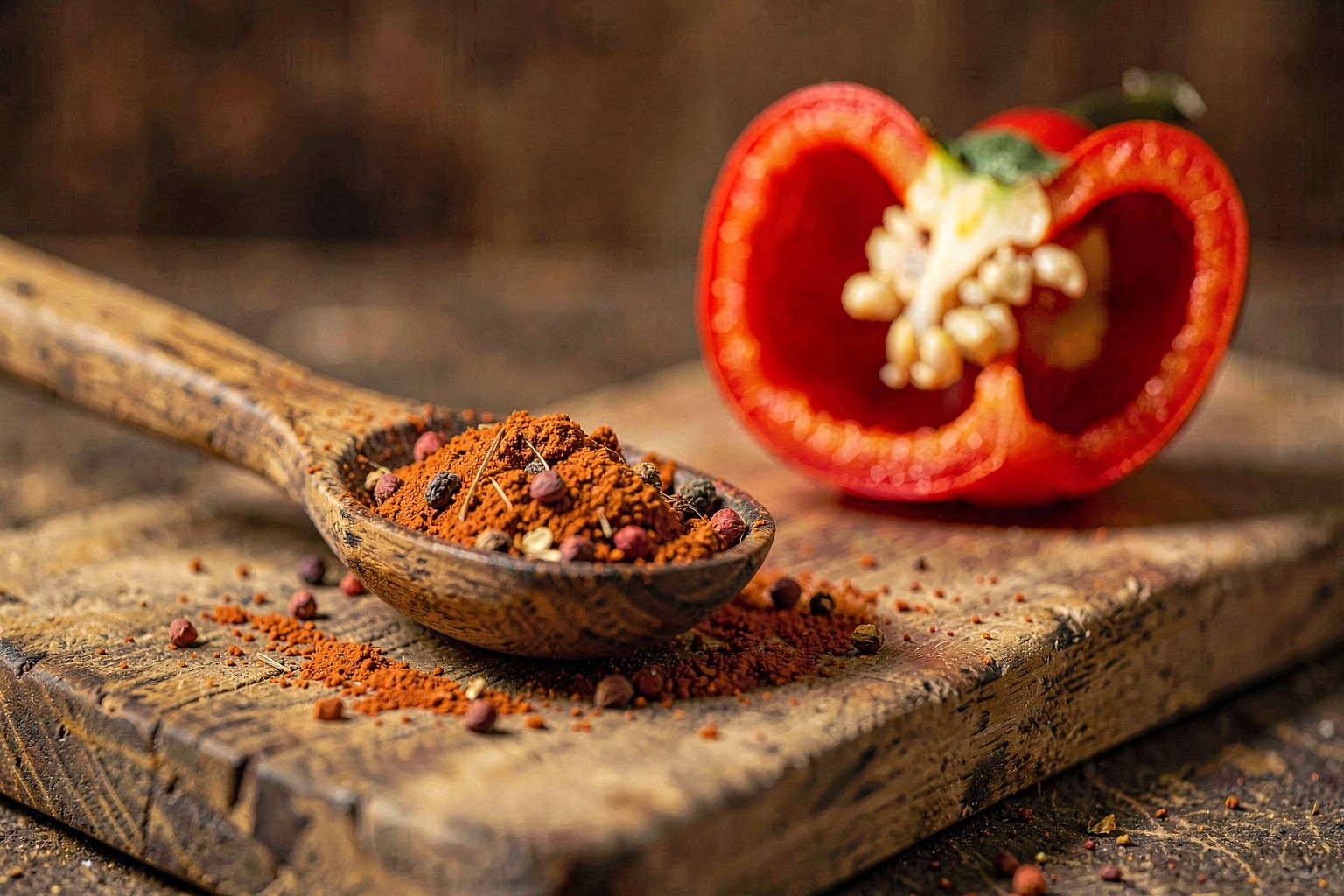
Smoked Paprika
A ground spice made from smoke-dried red peppers that delivers a distinct woodsy aroma and deep red color.
What it is
Smoked paprika, known as pimentón in Spain, is produced from Capsicum annuum peppers that are dried over wood fires, traditionally oak, before being ground into a fine powder. This smoking process distinguishes it from standard sweet paprika, locking in a smoky aroma that mimics slow-cooked meats or grilled foods. It is available in three heat levels: dulce (sweet and mild), agridulce (bittersweet), and picante (hot). While regular paprika primarily provides color and mild sweetness, smoked paprika acts as a potent flavor amplifier with a complex, earthy profile. The texture ranges from fine powder to slightly coarse, depending on the brand and origin. Authentic Spanish pimentón de la Vera is protected by a designation of origin, ensuring the traditional smoke-drying method is used. In contrast, generic supermarket brands may use liquid smoke additives or artificial flavorings to replicate the taste. The ingredient is essential in dishes where a wood-fired element is desired without the use of an actual grill or smoker.
How to buy
Prioritize jars labeled Pimentón de la Vera for the most authentic flavor, as the PDO guarantees the oak-smoking process and capsicum variety. Inspect the color; it should be a vibrant, deep crimson rather than a dull brown, which indicates age or oxidation. Check the packaging date, as paprika loses its volatile oils and potency within six months of opening. Avoid containers with broken seals or signs of moisture, which lead to clumping and mold. Mainstream grocery stores often stock generic brands that may lack depth, so visit specialty spice shops or Latin American markets for higher quality options. If buying online, look for brands that specify the smoking method and harvest date. Store-bought blends containing smoked paprika often dilute the flavor with fillers, so purchasing the pure spice is more cost-effective for long-term use.
Storage
Store in an airtight container in a cool, dark pantry away from the stove or direct sunlight to prevent flavor degradation. Properly sealed, it retains peak potency for six months but remains safe to consume for up to a year. Discard the spice if the vibrant red color fades to brown or if the characteristic smoky aroma is no longer detectable when rubbed between fingers.
How to use
Bloom the spice in hot oil or fat at the beginning of cooking to release its essential oils and deepen the flavor. Add it to rubs for meats before roasting, but avoid direct high-heat frying, which burns the sugars and creates a bitter taste. Use sparingly, starting with half a teaspoon per pound of protein, as the smokiness intensifies during reduction. Finish stews and sauces with a pinch to preserve the fresh smoke aroma that cooking can diminish. It pairs exceptionally well with fatty ingredients like pork, chickpeas, and potatoes, where the smoke cuts through the richness. Do not substitute it 1:1 for sweet paprika in delicate dishes like stuffed peppers, as the smoke may overpower subtle flavors. In savory applications like goulash or chorizo, it is non-negotiable for authenticity.
Where it comes from
Originating in Extremadura, Spain, pimentón is a cornerstone of Galician and Castilian cuisine, defining the flavor of chorizo and lacón con grelos. Spanish monks introduced the Capsicum annuum pepper from the Americas in the 16th century, adapting local oak-smoking techniques to the new crop. This tradition remains protected today, ensuring that authentic pimentón de la Vera maintains a specific regional identity distinct from other smoked pepper powders.
Substitutions
- Regular Paprika + Liquid Smoke — Adds smoke flavor but lacks the specific pepper sweetness; use liquid smoke sparingly to avoid bitterness.
- Chipotle Powder — Provides smoke and heat but introduces a different pepper profile and significantly more spiciness.