Pulpo a la Gallega (Galician Octopus)
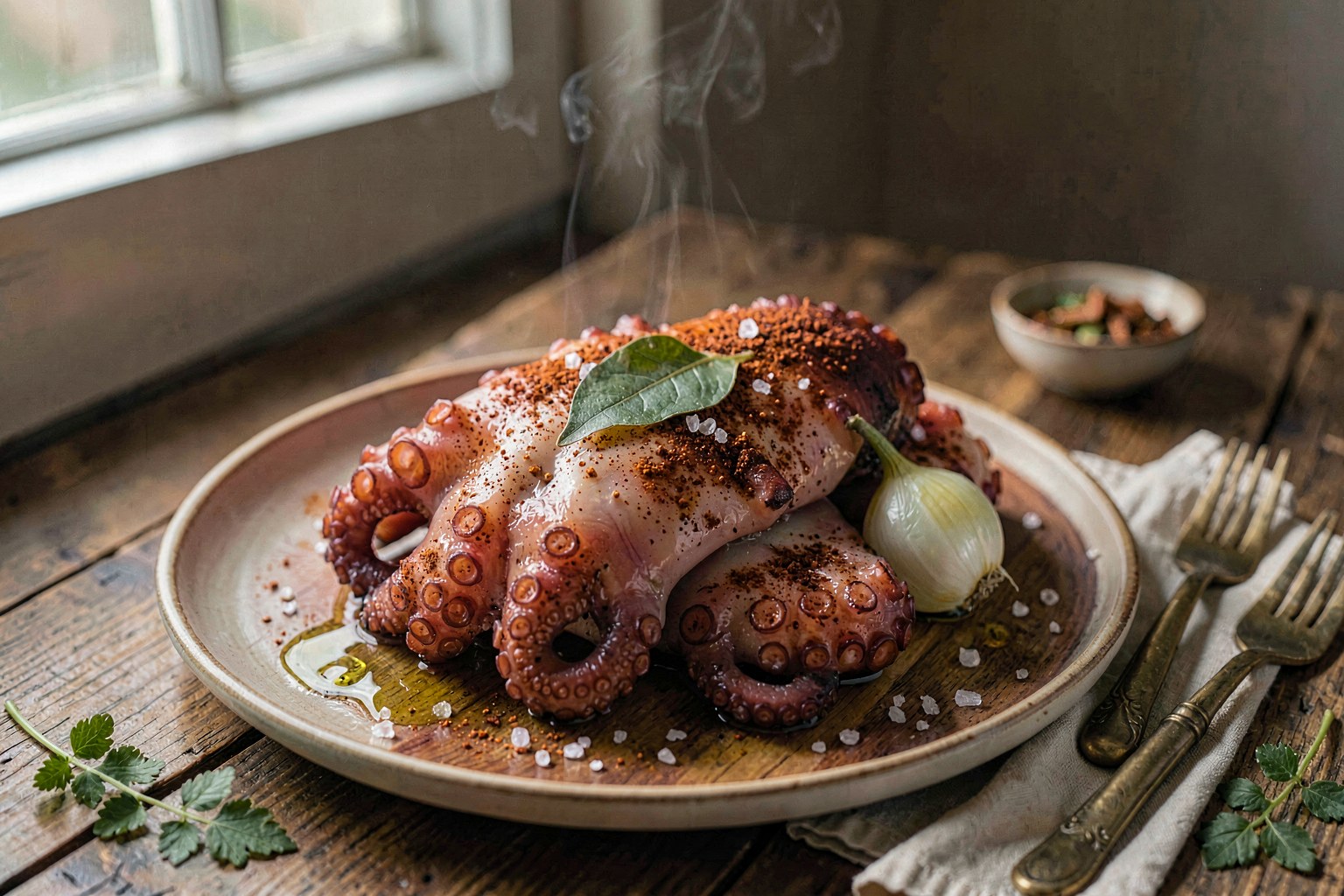
This classic Galician dish features tender, hand-torn octopus served on a wooden platter, dressed simply with smoky paprika, coarse sea salt, and extra virgin olive oil. The result is a delicate, briny seafood experience where the quality of the octopus and the simplicity of the seasoning take center stage.
A little context
Originating in Galicia, northwest Spain, Pulpo a la Gallega (or Pulpo á feira) is a staple of local festivals and family gatherings. Traditionally prepared in a copper pot, the octopus is boiled, then sliced and dressed immediately to maintain its texture. Authentic preparation relies heavily on the 'pimentón de la Vera' paprika, which provides a distinct smoky depth that defines the dish's character.
Method
- 01
Prepare the pot
Fill a large stockpot with enough water to fully submerge the octopus. Add the halved onion (skin on) and the bay leaf. Bring to a rolling boil over high heat.
- 02
The 'scare' technique
Grasp the octopus by the head and dip the tentacles into the boiling water three times, lifting them out each time. This shocks the skin, helping it to set and preventing it from falling off during cooking.
- 03
Simmer the octopus
Submerge the entire octopus into the pot. Reduce heat to a gentle simmer. Cook for approximately 45 minutes, or until a fork easily pierces the thickest part of a tentacle. Cooking time depends on the size and freshness; frozen octopus often cooks faster.
- 04
Check for tenderness
Test the octopus by inserting a skewer or fork into the thickest tentacle. It should slide in with zero resistance. If it feels rubbery, continue cooking in 5-minute increments.
- 05
Rest and slice
Remove the octopus from the water and let it rest on a clean surface for 5 minutes. Using kitchen shears or a sharp knife, cut the tentacles into 2 cm (3/4 inch) thick rounds. Slice the body into similar-sized chunks.
- 06
Arrange on board
Arrange the sliced octopus on a wooden cutting board or serving platter. Ensure the pieces are spread out in a single layer to maximize surface area for the dressing.
- 07
Season and dress
Immediately sprinkle the coarse sea salt over the hot octopus. Drizzle generously with the extra virgin olive oil, ensuring every piece is coated. Finally, dust the entire dish evenly with the smoked paprika.
- 08
Serve
Serve immediately while still warm. Traditionally, this is eaten with toothpicks directly from the wooden board, accompanied by boiled potatoes or crusty bread.
Pro tips
- ✦Freezing fresh octopus for at least 48 hours before cooking breaks down tough fibers, resulting in more tender meat.
- ✦Always use Pimentón de la Vera; regular paprika lacks the essential smoky depth required for authentic flavor.
- ✦Do not rinse the octopus after boiling; the natural juices and oils on the surface help the seasoning adhere.
- ✦The wooden board is crucial as it absorbs excess oil and keeps the octopus warm longer than glass or metal.
- ✦If the skin is difficult to remove after boiling, gently rub it with a paper towel while the octopus is still warm.
Shop this recipe
As an Amazon Associate we earn from qualifying purchases.
Substitutions
- fresh octopus → frozen octopus (thaw completely in the refrigerator before cooking; texture is often improved by freezing first)
- Pimentón de la Vera → high-quality smoked paprika (acceptable in a pinch, but will lack the specific smoky sweetness of the Spanish variety)
Storage
Store leftovers in an airtight container in the refrigerator for up to 2 days. Reheat gently in a pan with a splash of olive oil to restore tenderness; do not microwave as it will toughen the meat.
What to serve with it
- Albariño white wine
- Ribeiro white wine
- Boiled potatoes with skin on
- Crusty country bread
- Simple green salad with lemon vinaigrette
FAQ
Why does the octopus float?+
This is normal and indicates the air has been released from the body cavity. It does not mean it is done; check for tenderness with a fork.
Can I add garlic to the boiling water?+
Traditional Galician recipes do not add garlic to the water; the flavor comes purely from the octopus, paprika, and oil. Adding garlic is a common variation but not authentic.
How do I know if the octopus is fresh?+
Fresh octopus should have a shiny, firm texture and a clean sea smell. If using frozen, ensure it was flash-frozen at sea to preserve texture.