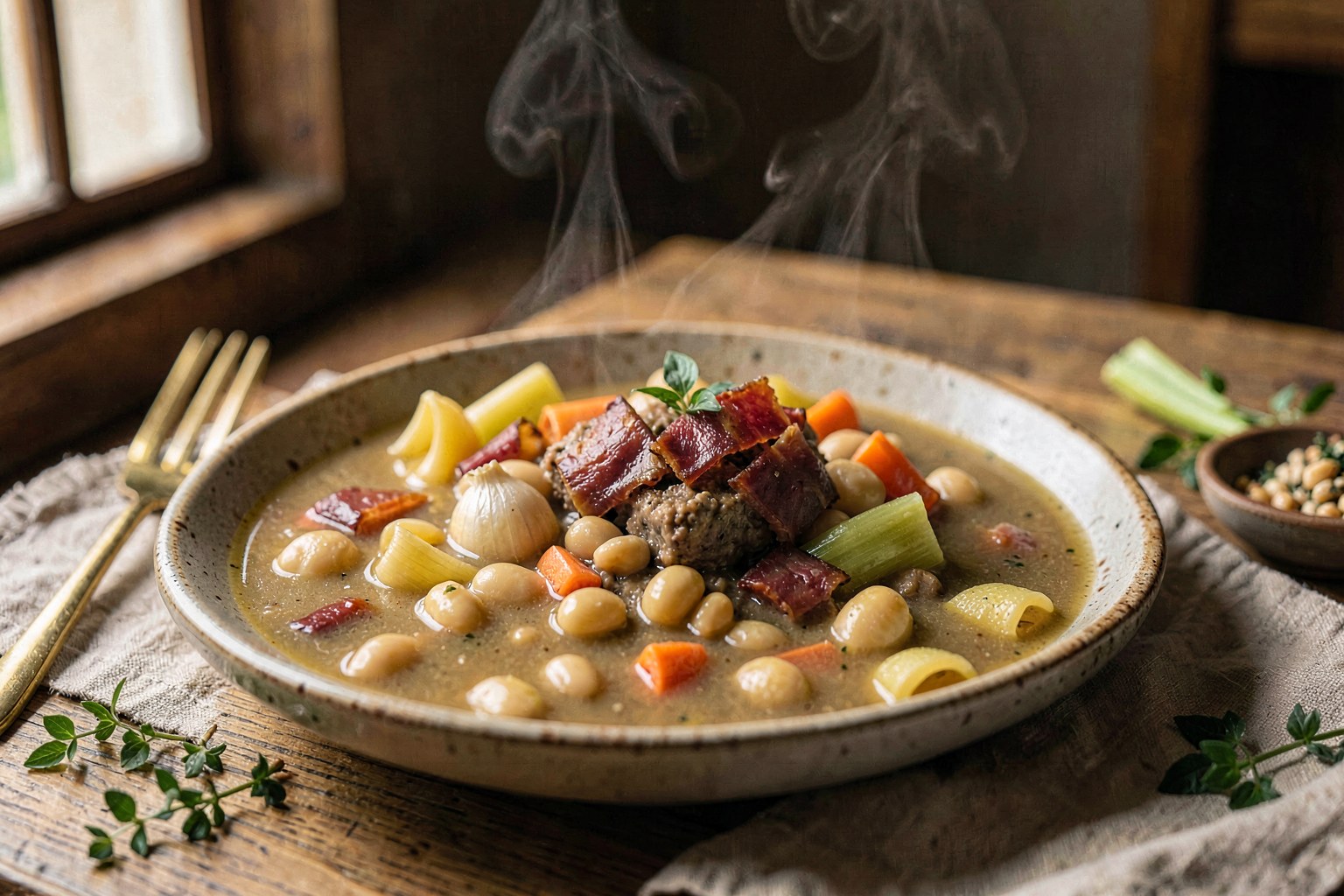
Pasta e Fagioli: Tuscan White Bean & Guanciale Soup
A rustic Tuscan soup where creamy cannellini beans meet al dente ditalini in a savory broth enriched by rendered guanciale. The dish balances earthy legumes with a deep, meaty umami finish, offering a comforting bowl of warmth perfect for cold evenings.
A little context
Pasta e fagioli (pasta and beans) is a cornerstone of Italian peasant cuisine, particularly in Tuscany and Veneto, where it was historically known as 'cucina povera' or poor cooking. It relied on pantry staples like dried beans, cheap cuts of meat, and small pasta shapes to create a filling, nutritious meal. Authentic versions often skip heavy tomato bases in favor of a broth that lets the bean flavor shine, thickened by mashing some of the beans. This dish is traditionally served on Sundays or during winter months as a hearty main course.
Method
- 01
Render the fat
Place the diced guanciale in a cold Dutch oven. Turn heat to medium-low and cook slowly for 10 minutes until the fat renders and the meat is golden and crisp. Do not drain the fat; this is the flavor base.
- 02
Sweat the vegetables
Add the onion, carrot, and celery to the rendered fat. Increase heat to medium and sauté for 5–7 minutes until the vegetables are soft and translucent but not browned. Add the smashed garlic cloves and cook for 1 more minute until fragrant.
- 03
Build the broth
Pour in the warm stock and add the bay leaves. Bring the mixture to a gentle boil, then reduce heat to low. Simmer uncovered for 10 minutes to allow the flavors to meld.
- 04
Thicken the soup
Add the drained cannellini beans to the pot. Using a potato masher or the back of a wooden spoon, mash about one-third of the beans directly in the pot. This releases starch and naturally thickens the broth.
- 05
Cook the pasta
Stir in the dry ditalini. Simmer gently, stirring occasionally to prevent sticking, for 8–10 minutes or until the pasta is al dente. The soup should be thick and creamy, not soupy; add a splash of hot water if it becomes too dry.
- 06
Season and rest
Remove the bay leaves and garlic cloves. Season with salt and black pepper to taste. Turn off the heat and let the soup rest for 5 minutes; the pasta will continue to absorb liquid and the flavors will settle.
- 07
Serve
Ladle into deep bowls. Drizzle generously with cold extra virgin olive oil and sprinkle with fresh rosemary if using. Serve immediately while hot.
Pro tips
- ✦Mashing the beans in the pot is crucial for the signature creamy texture; do not skip this step.
- ✦If using dried beans, soak them overnight and boil them separately until tender before adding to the soup to ensure even cooking.
- ✦Pasta continues to absorb liquid as it sits; if reheating leftovers, add a splash of stock or water to loosen the consistency.
- ✦Render the guanciale slowly; rushing this step results in tough meat and less flavorful fat.
- ✦For a richer finish, stir in a tablespoon of butter just before serving, though olive oil is more traditional.
Shop this recipe
As an Amazon Associate we earn from qualifying purchases.
Substitutions
- guanciale → pancetta or thick-cut smoked bacon (pancetta is leaner; bacon adds a smokier profile)
- ditalini → small shell pasta or orzo (ensure the shape is small enough to be eaten with a spoon)
- cannellini beans → borlotti or navy beans (borlotti beans add a nuttier flavor and speckled appearance)
Storage
Store in an airtight container in the refrigerator for up to 4 days. The soup will thicken significantly when cold; reheat gently with added stock or water. Freezes well for up to 3 months, but note that pasta may become softer upon reheating.
What to serve with it
- Crusty Italian bread or grissini for dipping
- A glass of Chianti Classico or Sangiovese
- Simple arugula salad with lemon vinaigrette to cut the richness
FAQ
Can I make this ahead of time?+
Yes, this dish tastes even better the next day as the flavors deepen. Just remember to add extra liquid when reheating.
Why is my soup too thick?+
Pasta absorbs liquid over time. If the soup is too thick upon serving or reheating, simply stir in warm stock or water until the desired consistency is reached.
Is this dish spicy?+
No, traditional Pasta e Fagioli is not spicy. You can add red pepper flakes during the sauté step if you prefer heat.