Lacão à Lagareiro
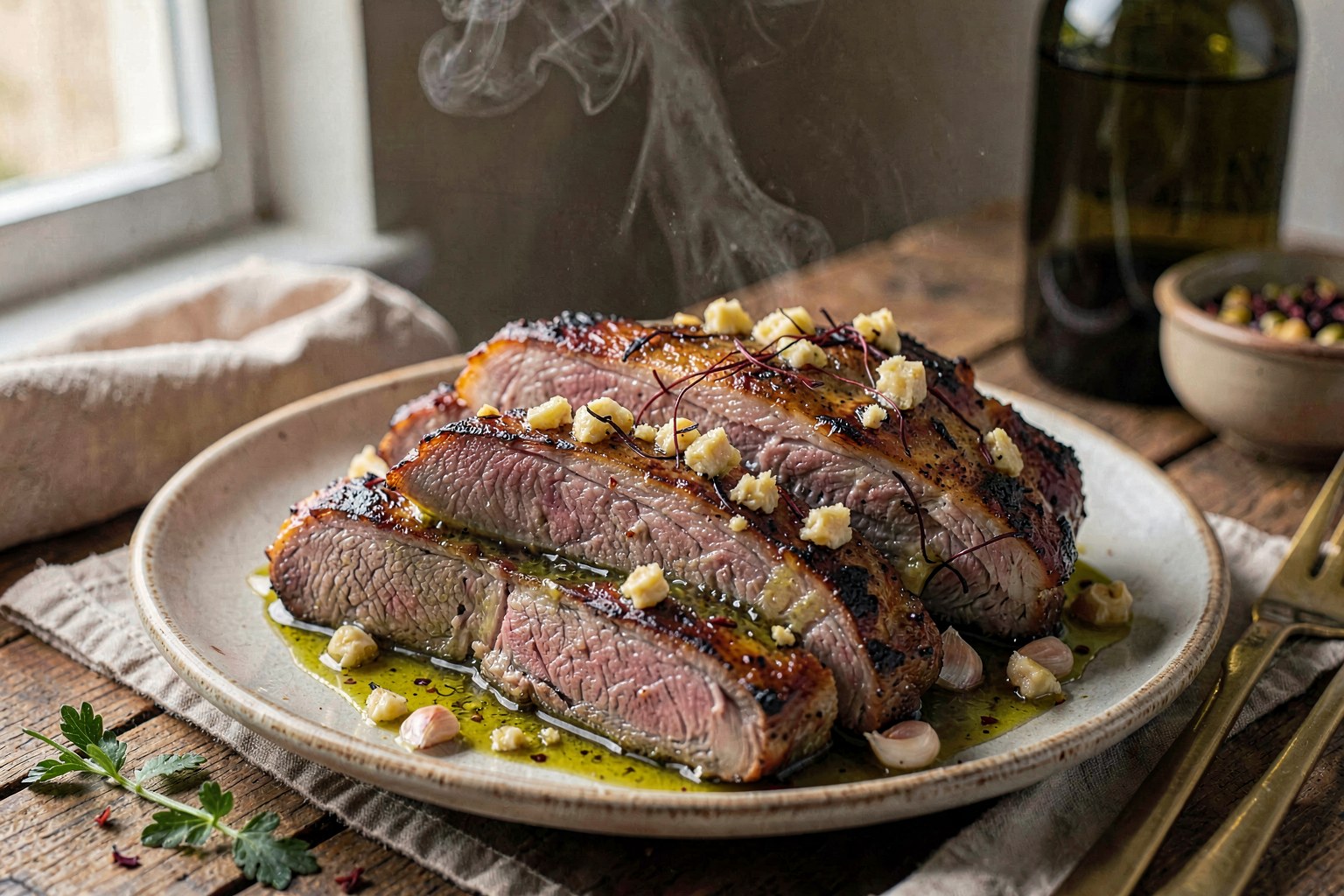
Thick-cut pork loin steaks are roasted until golden and tender, then bathed in a sizzling emulsion of olive oil, smashed garlic, and saffron. This rustic Portuguese classic delivers rich, savory flavors with a hint of floral warmth, making it a comforting centerpiece for a hearty lunch.
A little context
Lacão à Lagareiro is a beloved dish from the Alentejo region of Portugal, named after the 'lagareiros' (olive oil pressers) who historically enjoyed this simple yet luxurious meal. Traditionally, the 'lacão' refers to a thick slice of pork loin, distinct from the rib-based 'lombo' often found in other cuts. The dish highlights the Portuguese obsession with high-quality olive oil and garlic, often served alongside boiled potatoes or crusty bread to soak up the flavorful juices.
Method
- 01
Prepare the saffron salt
In a small mortar, combine the sea salt and saffron threads. Grind them together until the saffron is fully crushed and the salt takes on a golden hue. This releases the essential oils.
- 02
Season the pork
Pat the pork loin steaks completely dry with paper towels. Rub the saffron salt mixture evenly over both sides of the meat, ensuring the golden color coats the surface. Let rest at room temperature for 15 minutes.
- 03
Sear the pork
Heat a large cast-iron skillet over medium-high heat. Add 2 tablespoons of the olive oil. Once shimmering, add the pork steaks. Sear for 3-4 minutes per side until a deep golden-brown crust forms. Do not move them while searing. Transfer to a plate.
- 04
Sauté the garlic
Reduce heat to medium. Add the remaining olive oil and the smashed garlic cloves to the same skillet. Cook for 2-3 minutes, stirring gently, until the garlic is fragrant and just beginning to turn golden, watching closely to prevent burning.
- 05
Deglaze with wine
Pour in the white wine, scraping the bottom of the pan with a wooden spoon to release any browned bits (fond). Let the wine bubble and reduce by half, about 3-4 minutes.
- 06
Roast the pork
Preheat your oven to 190°C (375°F). Return the pork steaks to the skillet, nestling them among the garlic. Pour the wine and oil mixture over the meat. Transfer the skillet to the oven and roast for 20-25 minutes, or until the internal temperature reaches 63°C (145°F) for medium.
- 07
Rest and glaze
Remove the skillet from the oven. Carefully transfer the pork to a serving platter and let it rest for 5-10 minutes. While resting, return the skillet to the stovetop over medium heat. Simmer the sauce for 2-3 minutes until it thickens slightly and coats the back of a spoon.
- 08
Serve
Pour the hot garlic-saffron oil glaze generously over the rested pork steaks. Serve immediately with the roasted garlic cloves and plenty of crusty bread or boiled potatoes to catch the juices.
Pro tips
- ✦Do not skip the resting period; it allows the juices to redistribute for a tender bite.
- ✦Smashing the garlic cloves releases flavor without burning them as quickly as minced garlic would.
- ✦If you don't have saffron, turmeric can provide color but lacks the distinct floral aroma.
- ✦Ensure your skillet is oven-safe; if not, transfer the contents to a roasting pan before baking.
- ✦The garlic cloves are edible and delicious; they become sweet and creamy when cooked.
Shop this recipe
As an Amazon Associate we earn from qualifying purchases.
Substitutions
- pork loin → pork shoulder steaks (slightly fattier and more forgiving if slightly overcooked)
- dry white wine → chicken or vegetable broth (add a splash of lemon juice to mimic the acidity of wine)
- saffron threads → safflower or turmeric (use sparingly; these provide color but not the same flavor profile)
Storage
Store leftovers in an airtight container in the refrigerator for up to 3 days. Reheat gently in a skillet with a splash of water or broth to re-emulsify the oil. Freezing is not recommended as the texture of the pork and garlic may degrade.
What to serve with it
- Boiled new potatoes with parsley
- Sautéed green beans
- Crusty Portuguese bread (Pão de Alho)
- Vinho Verde or a light Alentejo red wine
FAQ
Can I make this in a slow cooker?+
No, this dish relies on a high-heat sear and a quick roast to maintain the texture of the loin. Slow cooking will make the lean meat dry and tough.
Is the garlic safe to eat after roasting?+
Yes, the garlic cloves are soft, sweet, and perfectly safe to eat. They lose their pungency during the roasting process.
Can I use olive oil spray?+
No, this recipe requires a generous amount of high-quality extra virgin olive oil to create the signature emulsion and sauce. Spray will not yield the same results.