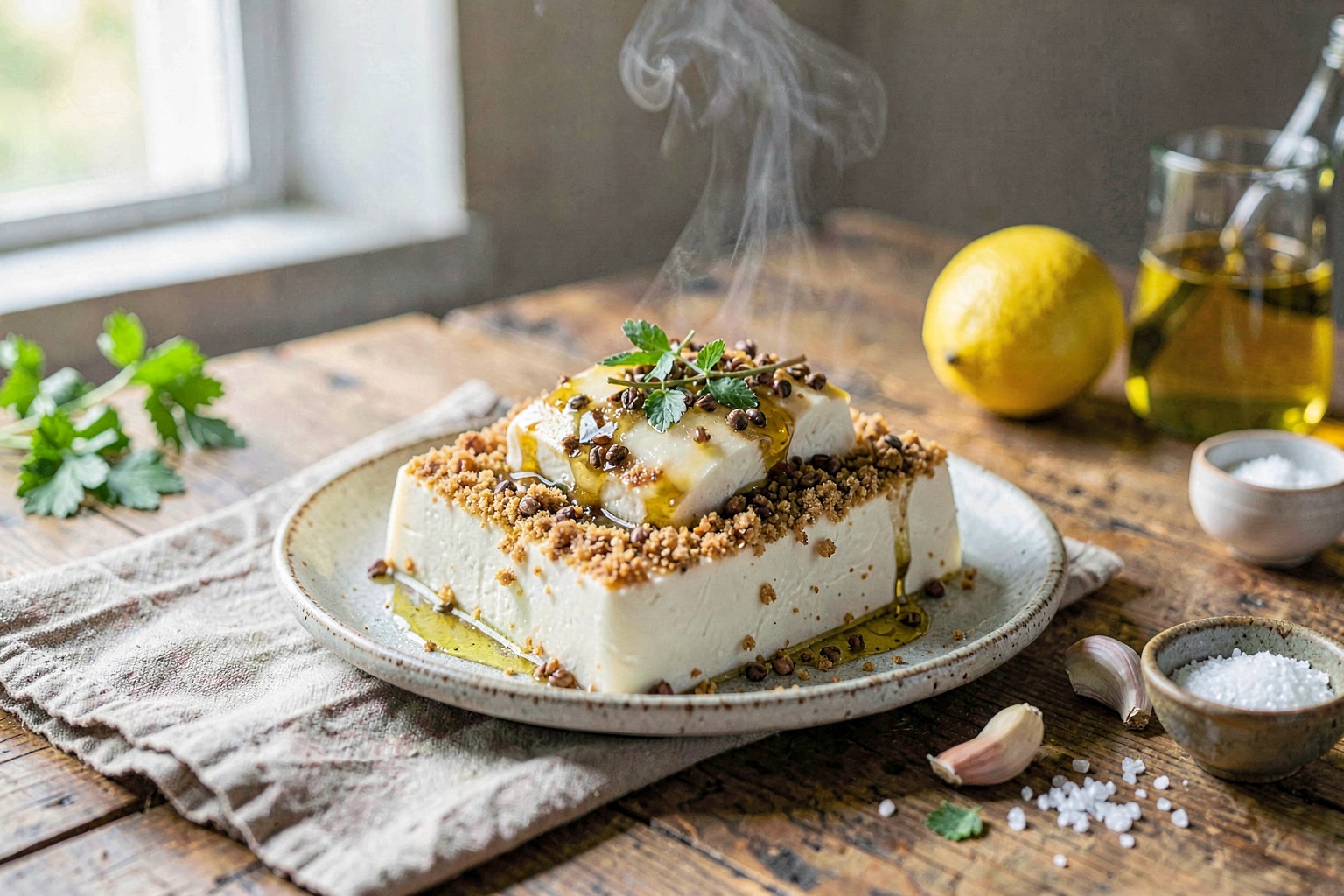
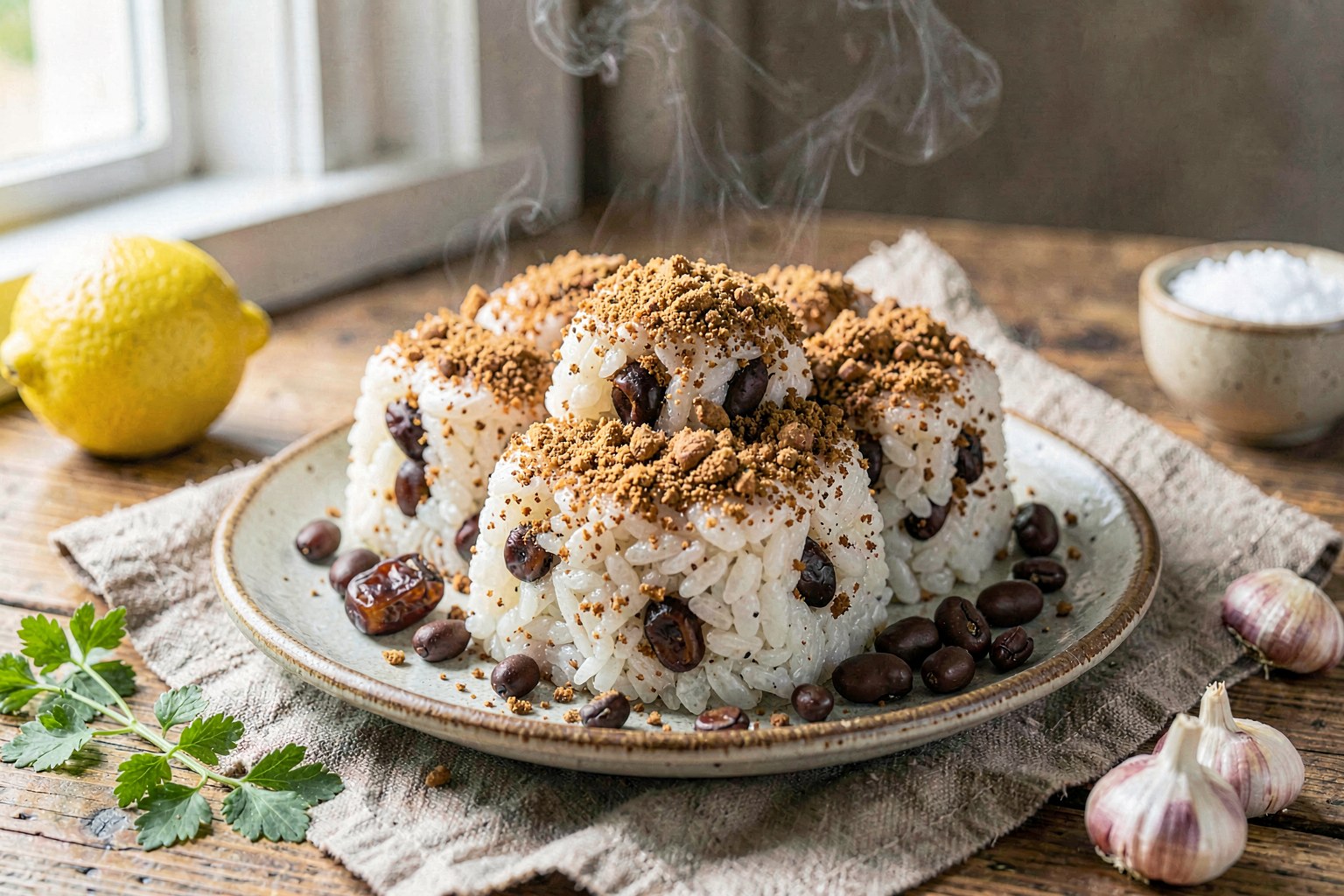
Steamed Kinako Mochi with Roasted Soybean Dust
These tender, steamed rice cakes are coated in a fragrant, nutty layer of roasted organic soybean flour (kinako), offering a warm, earthy sweetness without a single drop of refined sugar. The texture is uniquely chewy yet soft, providing a satisfying, slow-burning carbohydrate base for a light dinner that respects the Japanese tradition of Washoku while adhering to strict longevity protocols.
A little context
Kinako Mochi is a beloved Japanese treat traditionally dusted with roasted soybean flour and often sweetened with sugar or syrup. We honor this tradition by sourcing organic, non-GMO soybeans and roasting them ourselves to unlock their natural nutty depth, replacing refined sugar entirely with the natural fructose of whole Medjool dates. This approach strips away the ultra-processed additives common in store-bought versions while preserving the authentic texture and flavor profile of the original Washoku dish.
The longevity story
This dish leverages the high fiber and isoflavones found in organic soybeans (kinako) to support hormonal balance and gut microbiome diversity. The glutinous rice provides a low-glycemic, polyphenol-free energy source that avoids blood sugar spikes when paired with the protein and fiber of the soy coating. By using only whole dates for minimal sweetness, we retain the antioxidant profile of the fruit while eliminating the inflammatory response associated with sucrose.
Method
- 01
Toast the Soybeans
Place raw organic soybeans in a heavy, dry skillet over medium-low heat. Stir constantly for 15-20 minutes until the beans turn golden brown, smell deeply nutty, and the skins begin to crack. Be careful not to burn them, as bitterness will ruin the flavor. Transfer immediately to a cool plate to stop the cooking.
- 02
Grind the Kinako
Once the soybeans are completely cool, place them in a high-powered blender or spice grinder. Pulse until they form a fine, sandy flour. Sift through a mesh sieve to remove any large chunks of skin or unground beans. Stir in the sea salt and the optional maple syrup if you prefer a slightly sticky coating. Set aside 1 cup of this mixture for the final dusting.
- 03
Prepare the Mochi Batter
In a medium heatproof bowl, whisk together the sifted sweet rice flour, chopped Medjool dates, and filtered water until smooth. The dates should begin to soften and dissolve into the batter. Ensure no lumps remain, as they will affect the even texture of the steamed cake.
- 04
Steam the Mochi
Line your bamboo steamer with a clean, damp kitchen towel or cheesecloth (lightly misted with water to prevent sticking, no oil needed). Pour the batter into the center of the cloth, spreading it into a thick, even round about 2-3 cm thick. Place the steamer over a pot of boiling water, ensuring the water does not touch the bottom of the basket. Cover and steam on medium-high heat for 30-40 minutes.
- 05
Check for Doneness
The mochi is ready when it becomes translucent and puffy, and a toothpick inserted into the center comes out clean. The texture should be firm to the touch but yielding. If it still looks wet or doughy, steam for another 5-10 minutes.
- 06
Cool and Dust
Remove the steamer from the heat. Carefully lift the cloth with the mochi onto a cutting board dusted with the reserved roasted soybean flour. Let it cool for 5 minutes until it is safe to handle. Using a bench scraper or knife dusted with kinako, cut the mochi into 12-16 bite-sized squares or diamonds.
- 07
Final Coating
Roll each piece of warm mochi in the remaining kinako flour until fully coated on all sides. The heat from the mochi will help the flour adhere, creating a fragrant, nutty exterior. Serve immediately while the center is still warm and chewy.
Nutrition facts
Per serving · 1 of 4- — Saturated
- 1 g
- — Polyunsaturated
- 3 g
- Carbohydrates
- 81 g
- — Fiber
- 6 g
- — Sugars
- 4 g
- Cholesterol
- 0 mg
- Sodium
- 1043 mg
- Potassium
- 441 mg
Estimated from USDA FoodData Central for matched ingredients (67% ingredient coverage). Values vary with brand, preparation, and exact measurements.
Pro tips
- ✦Sourcing is critical: Buy organic, non-GMO whole soybeans from a health food store or bulk bin to ensure they haven't been treated with pesticides or processed with hexane.
- ✦Do not skip the cooling step before grinding soybeans; hot beans will clump and create a paste rather than a fine flour.
- ✦If the mochi feels too sticky to cut, dip your knife in warm water and wipe dry between cuts to prevent dragging.
- ✦For a savory twist, omit the dates and add a pinch of shiso powder to the soybean dust.
- ✦Store-bought kinako often contains added sugar; making your own from whole beans guarantees a polyphenol-rich, sugar-free product.
Shop this recipe
As an Amazon Associate we earn from qualifying purchases.
Substitutions
- Medjool dates → pure maple syrup or monk fruit syrup (use 2 tbsp liquid syrup if substituting, but note texture may be slightly less chewy)
- sweet rice flour (mochiko) → glutinous brown rice flour (adds a nuttier, earthier flavor and slightly more fiber, but requires a few extra minutes of steaming)
Storage
Store in an airtight glass container in the refrigerator for up to 3 days. Reheat by steaming for 3-5 minutes to restore chewiness. Do not freeze, as the texture becomes gritty upon thawing.
What to serve with it
- Hot matcha tea (ceremonial grade) to complement the earthy soy notes
- Unsweetened hibiscus tea for a tart contrast
- A small side of miso soup with wakame and tofu
- Fresh berries for a polyphenol boost and acid balance
FAQ
Can I use store-bought kinako?+
You can, but most commercial kinako contains added sugar or preservatives. We recommend roasting your own organic soybeans to ensure the dish remains strictly Blueprint-aligned and free of hidden sugars.
Is this safe for those with soy allergies?+
No, this recipe is not safe for soy allergies as the primary coating is made from roasted soybeans. A nut-free alternative would require a different flour coating, which changes the cultural profile entirely.
Why does my mochi turn out hard?+
This usually happens if the steaming time is insufficient or if the rice flour wasn't fresh. Ensure you steam until the mochi is fully translucent and puffy.
Share this recipe
Notes from the community
Sign in to leave a note.
No notes yet — be the first.
You might also like