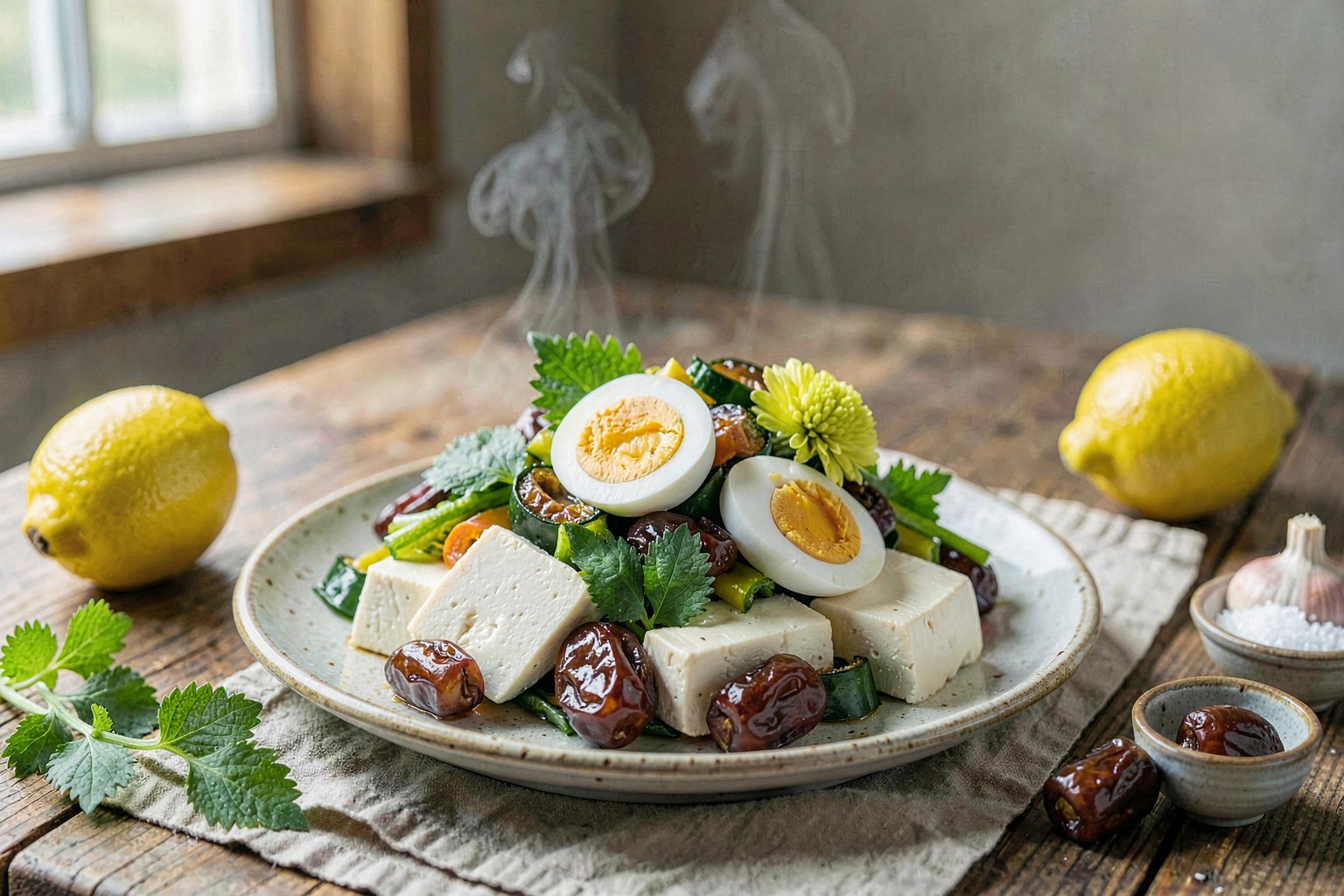
Okinawan Goya Champuru with Pastured Eggs and Fermented Tofu
A vibrant, bitter-sweet stir-fry rooted in Okinawan longevity traditions, featuring charred bitter melon, silken tofu, and pasture-raised eggs. This version skips the refined sugar and seed oils of the classic, relying on the natural sweetness of ripe fruit and the savory depth of fermented soy to create a deeply satisfying, nutrient-dense dinner.
A little context
Goya Champuru is the culinary heart of Okinawa, the 'Blue Zone' known for its exceptional longevity. Traditional recipes often call for sugar and canola oil, which we have respectfully replaced with the natural sweetness of whole dates and the anti-inflammatory properties of extra-virgin olive oil. We honor the spirit of the dish—balancing the 'bitter' (goya) with the 'sweet' and 'umami'—by using traditional fermentation techniques and high-quality, farm-fresh ingredients rather than processed shortcuts.
The longevity story
This dish is a powerhouse of bioactive compounds: bitter melon (Momordica charantia) provides charantins and polypeptide-p, which support healthy blood sugar regulation, while the fermented tofu delivers probiotics and isoflavones for gut and hormonal health. The eggs from pasture-raised hens contribute choline and omega-3 fatty acids, and the use of extra-virgin olive oil and fresh shiso leaves adds a significant load of polyphenols and antioxidants that combat oxidative stress. By eliminating refined sugars, we prevent the insulin spikes that accelerate cellular aging, keeping the meal strictly aligned with longevity protocols.
Method
- 01
Tame the Bitterness
Place the sliced bitter melon in a bowl, sprinkle generously with 1 tsp of sea salt, and toss to coat. Let it sit for 15 minutes to draw out moisture and reduce bitterness. Rinse thoroughly under cold water, then squeeze the slices firmly with a clean kitchen towel or your hands to remove as much liquid as possible. This step is critical for texture and flavor balance.
- 02
Prepare the Sauce Base
In a small bowl, whisk together the chopped dates, coconut aminos, rice vinegar, grated ginger, white pepper, and remaining 1/2 tsp sea salt. The dates should begin to break down slightly, creating a thick, sweet-savory glaze. Set aside.
- 03
Sear the Tofu
Heat 1 tbsp of extra-virgin olive oil in your wok or skillet over medium-high heat. Add the cubed tofu in a single layer. Do not move them for 3-4 minutes until a deep golden crust forms. Flip and cook for another 2 minutes. Remove tofu from the pan and set aside on a plate.
- 04
Scramble the Eggs
Wipe the pan clean if necessary, add another 1/2 tbsp of oil, and increase heat to high. Pour in the whisked eggs. Let them set slightly, then gently push through the pan to create large, soft curds. Remove the eggs immediately once just set (they will finish cooking later) and set aside with the tofu.
- 05
Stir-Fry the Melon
Add the final 1/2 tbsp of oil to the hot pan. Toss in the dried bitter melon slices. Stir-fry vigorously for 4-5 minutes until the edges are charred and the melon is tender-crisp. The high heat is necessary to caramelize the natural sugars and mask the bitter notes.
- 06
Combine and Glaze
Return the tofu and eggs to the pan with the melon. Pour the date-vinegar sauce over the mixture. Toss gently but continuously for 1-2 minutes until the sauce coats everything evenly and reduces to a glossy glaze. The heat will finish cooking the eggs and warm the tofu through.
- 07
Finish with Greens
Remove the pan from heat immediately. Fold in the torn shiso leaves and chopped shungiku (or spinach). The residual heat will wilt the greens just enough to release their aroma without turning them slimy. Taste and adjust with a splash of vinegar or a pinch of salt if needed.
- 08
Serve Immediately
Divide into warm bowls. This dish is best eaten hot to enjoy the contrast between the charred melon, soft tofu, and creamy eggs. Serve alongside a small portion of brown rice or quinoa if desired, though the dish is complete as is.
Nutrition facts
Per serving · 1 of 4- — Saturated
- 8 g
- — Polyunsaturated
- 2 g
- Carbohydrates
- 14 g
- — Fiber
- 2 g
- — Sugars
- 8 g
- Cholesterol
- 0 mg
- Sodium
- 212 mg
- Potassium
- 250 mg
Estimated from USDA FoodData Central for matched ingredients (75% ingredient coverage). Values vary with brand, preparation, and exact measurements.
Pro tips
- ✦Sourcing the bitter melon: Look for firm, unblemished skin. If the skin is yellowing, it is overripe and will be unpleasantly bitter and mushy.
- ✦Don't skip the salting step: Squeezing the water out of the melon is the single most important step for achieving a stir-fry texture rather than a boiled one.
- ✦Date substitution: If you cannot find fresh dates, use 2 tbsp of date syrup or 1 tbsp of pure maple syrup, but add it at the very end to prevent burning.
- ✦Egg quality matters: In this dish, the egg is a star ingredient. Use eggs from hens that have access to pasture; the deep orange yolk indicates a superior nutrient profile.
- ✦Wok hei: If using a gas stove, crank the heat high for the final toss to get a slight smoky char on the melon edges.
Shop this recipe
As an Amazon Associate we earn from qualifying purchases.
Substitutions
- bitter melon (goya) → zucchini or cucumber (blanched) (If you cannot tolerate the bitterness, zucchini works for texture but lacks the blood-sugar-regulating benefits.)
- shungiku (chrysanthemum greens) → arugula or baby spinach (Arugula provides a similar peppery note; spinach is milder.)
- coconut aminos → tamari (gluten-free soy sauce) (Use a low-sodium version and reduce the added salt slightly.)
Storage
Store in an airtight glass container in the refrigerator for up to 2 days. The bitter melon will soften and the eggs will firm up upon reheating. Reheat gently in a skillet with a splash of water or broth to restore moisture; avoid microwaving if possible to preserve texture.
What to serve with it
- Hot sencha or hojicha green tea to aid digestion and complement the earthy flavors.
- A small side of miso soup (made with dashi and no sugar) for extra probiotics.
- Sparkling water with a wedge of fresh yuzu or lemon.
- A glass of dry, low-sulfite red wine like a natural Pinot Noir.
FAQ
Why do I need to salt and squeeze the bitter melon?+
Salting draws out excess water and bitter compounds (cucurbitacins). Squeezing ensures the melon fries rather than steams, giving it a meaty, pleasant texture.
Can I make this vegan?+
Yes, simply omit the eggs. You can add a handful of chopped roasted peanuts or cashews for protein and fat, or use a tofu scramble instead of the egg component.
Is this dish too bitter for children?+
The salt-and-squeeze method significantly reduces bitterness. The sweetness from the dates and the savory soy balance it well, making it a great introduction to bitter foods for kids.
Share this recipe
Notes from the community
Sign in to leave a note.
No notes yet — be the first.
You might also like