Flan de Queso
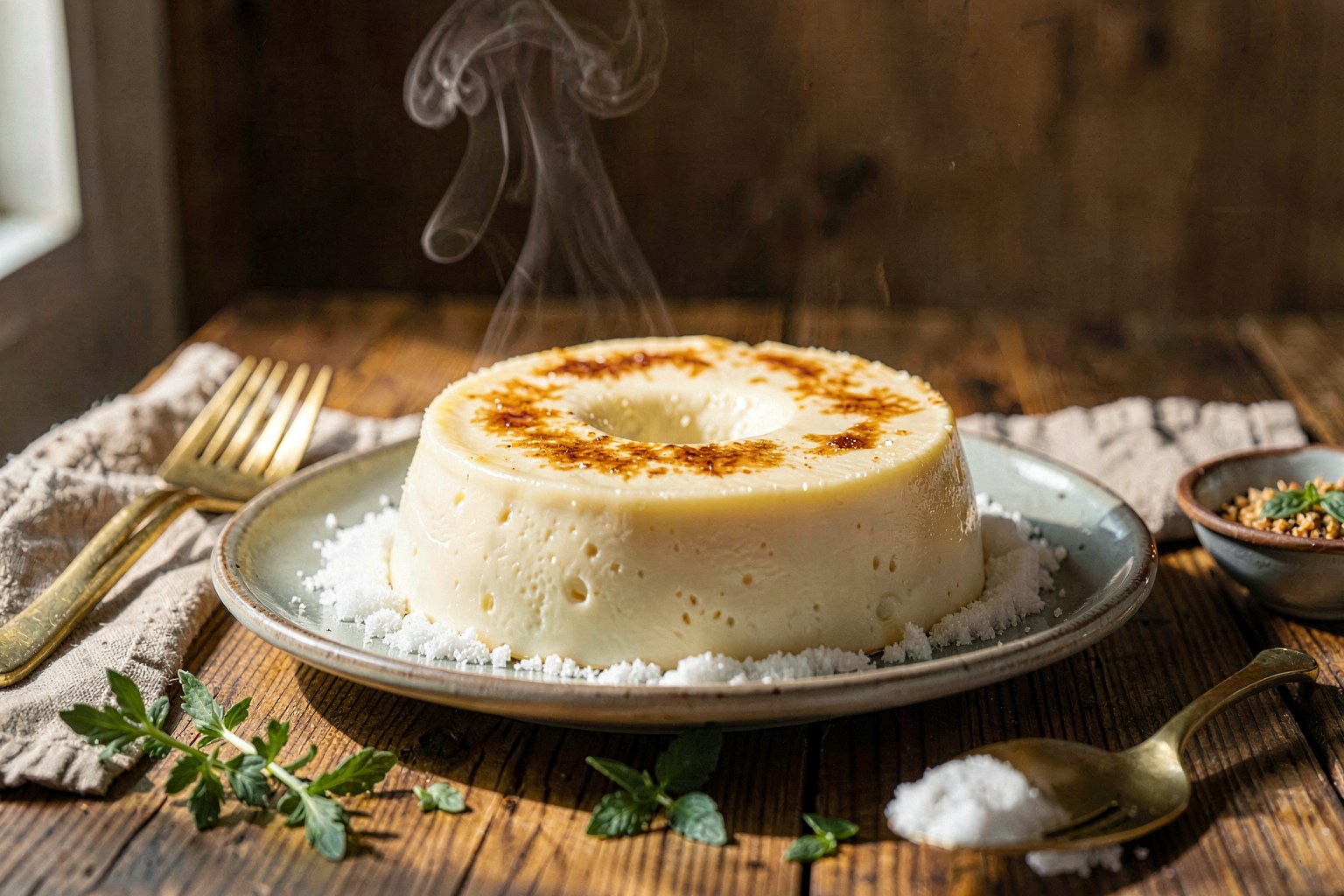
A dense, creamy custard from Cantabria made with fresh cheese that offers a distinct tangy-sweet balance. Unlike typical egg-heavy flans, this version relies on the richness of local cheese for its texture, crowned with a perfectly caramelized sugar crust.
A little context
Originating in the Asturias and Cantabria regions of northern Spain, Flan de Queso is a traditional dessert that celebrates the area's renowned dairy production. Historically made with fresh cow's cheese (queso fresco) or similar mild curds, it differs significantly from the gelatinous flan found elsewhere by having a firmer, almost cheesecake-like consistency. It is often served at family gatherings and festive dinners, particularly during autumn and winter months when the cheese is richest.
Method
- 01
Prepare the caramel
Combine the 100 g (1/2 cup) sugar and 30 ml (2 tbsp) water in a small saucepan over medium-high heat. Do not stir; swirl the pan occasionally until the sugar melts and turns a deep amber color (about 5-7 minutes). Immediately pour the hot caramel into the bottom of the springform pan, tilting to coat the base evenly. Let it harden completely.
- 02
Preheat and prep water bath
Preheat your oven to 180°C (350°F). Place the prepared springform pan inside a large roasting pan. Set this aside while you mix the custard.
- 03
Blend the base
In a food processor or blender, combine the fresh cheese, 4 eggs, 100 g (1/2 cup) sugar, the vanilla seeds (or extract), and salt. Blend until completely smooth and creamy, scraping down the sides as needed. This should take about 2-3 minutes.
- 04
Incorporate milk
With the blender running on low, slowly pour in the warmed milk. Blend just until combined. Do not over-blend at this stage to avoid incorporating too many air bubbles, which can create holes in the final texture.
- 05
Strain the mixture
Pour the custard mixture through a fine-mesh sieve into a large measuring jug or bowl. This step is crucial for removing any small curds from the cheese, ensuring a silky, uniform texture.
- 06
Fill and seal
Pour the strained custard into the caramel-lined springform pan. If your springform pan is not leak-proof, wrap the bottom and sides tightly with heavy-duty aluminum foil to prevent water from seeping in during baking.
- 07
Bake in water bath
Pour hot water from the kettle into the roasting pan until it reaches halfway up the sides of the springform pan. Carefully transfer the setup to the oven. Bake for 40-45 minutes. The flan is done when the edges are set but the center still jiggles slightly like gelatin when shaken gently.
- 08
Cool gradually
Turn off the oven and crack the door open slightly. Let the flan sit in the cooling oven for 15 minutes to prevent cracking from thermal shock. Remove from the water bath and let cool completely on a wire rack.
- 09
Chill and serve
Refrigerate the flan, uncovered, for at least 4 hours (preferably overnight) to fully set. To serve, run a thin knife around the edge, release the springform ring, and carefully invert the flan onto a serving plate so the caramel flows over the top.
Pro tips
- ✦Use fresh cheese (queso fresco) or high-quality ricotta; avoid cottage cheese as the curds will ruin the texture.
- ✦Straining the custard through a sieve is the single most important step for achieving a professional, silky finish.
- ✦If the caramel hardens too fast while pouring, microwave it for 10 seconds to make it fluid again.
- ✦Do not skip the water bath; the gentle heat prevents the eggs from scrambling and keeps the custard creamy.
- ✦The flan must be completely cold before inverting, or the structure may collapse.
Substitutions
- fresh cheese (queso fresco) → full-fat ricotta or mascarpone mixed with a little lemon juice (mascarpone will be richer and less tangy; add 1 tsp lemon juice to mimic the tang)
- whole milk → half-and-half or evaporated milk (will result in a richer, denser custard)
Storage
Store covered in the refrigerator for up to 4 days. Do not freeze, as the texture will become grainy and the caramel may separate upon thawing.
What to serve with it
- A glass of sweet Moscatel or Pedro Ximénez wine
- Fresh berries to cut through the richness
- Strong espresso or cortado
FAQ
Why is my flan too runny?+
It likely needs more baking time or more chilling time. The center should jiggle like Wobbly Jell-O, not liquid, when removed from the oven.
Can I make this in a loaf pan?+
Yes, a 9x5 inch loaf pan works well, but reduce the baking time by about 10-15 minutes and check for doneness earlier.