Authentic Piedmontese Bagna Cauda
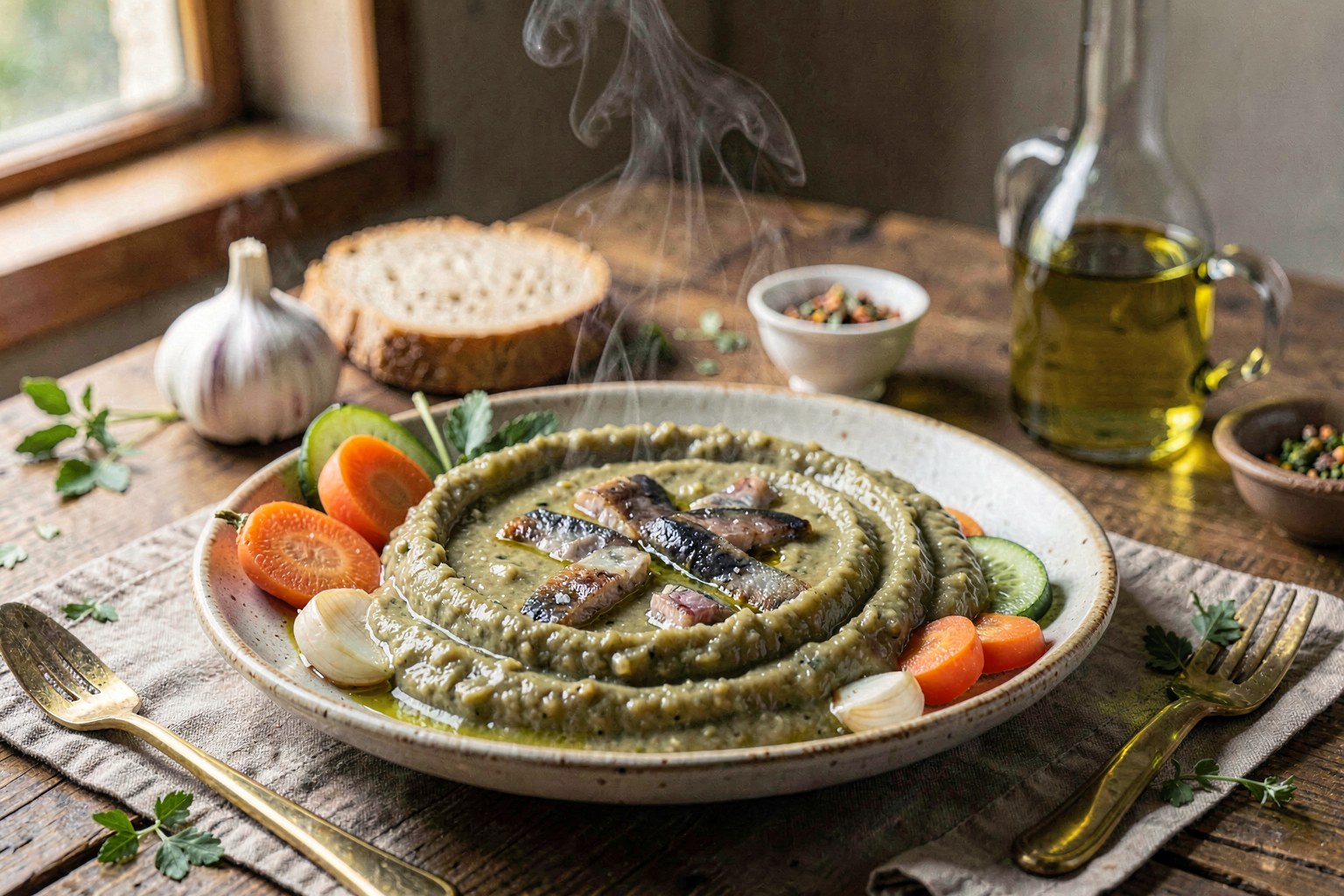
A velvety, aromatic warm dip from Northern Italy featuring garlic and anchovies melted into olive oil. Served hot, it pairs perfectly with crisp raw vegetables and crusty bread for a communal winter meal.
A little context
Bagna Cauda originates from the Piedmont region of northwestern Italy, where it has been a staple since the 16th century. The name translates to 'hot bath' in the local dialect, referring to the sauce kept warm over a candle flame in the center of the table. It is traditionally eaten during the autumn harvest months, using cardoons, peppers, and carrots from the garden. While variations exist, the authentic version relies on high-quality olive oil and salted anchovies to create a savory, umami-rich emulsion.
Method
- 01
Prepare the vegetables
Wash and dry all vegetables thoroughly. Cut carrots, peppers, and celery into uniform sticks approximately 5 cm (2 inches) long. Arrange on a large serving platter with the bread slices.
- 02
Infuse the oil
Place the small saucepan over low heat. Add the olive oil and sliced garlic. Cook gently for 5 minutes, stirring frequently, until the garlic is soft and fragrant but not browned.
- 03
Dissolve the anchovies
Add the rinsed anchovy fillets to the warm oil. Use a wooden spoon to mash them against the side of the pan, breaking them down until they dissolve completely into the oil.
- 04
Emulsify the sauce
Stir in the white wine vinegar. Continue to cook on the lowest heat setting for another 10 minutes, stirring occasionally, until the mixture thickens slightly and becomes creamy.
- 05
Maintain temperature
Transfer the sauce to a fondue pot or chafing dish set over a low flame or candle. The sauce should be warm, not boiling, to prevent the garlic from turning bitter.
- 06
Serve immediately
Place the warm sauce in the center of the table surrounded by the vegetable platter. Instruct guests to dip the vegetables directly into the pot, stirring occasionally to keep the sauce emulsified.
Pro tips
- ✦Never let the garlic boil or fry; it must only infuse the oil to avoid bitterness.
- ✦If the sauce separates, whisk in a teaspoon of warm water to re-emulsify.
- ✦Use a salted anchovy variety for the most authentic flavor profile.
- ✦Keep a small bowl of water nearby for guests to rinse vegetables before dipping if desired.
- ✦Reheat gently on the stovetop if the sauce cools too much; do not microwave.
Shop this recipe
As an Amazon Associate we earn from qualifying purchases.
Substitutions
- extra virgin olive oil → unsalted butter (traditional variation adds richness, increases dairy)
- white wine vinegar → fresh lemon juice (brighter acidity, add at the end)
- salted anchovies → oil-packed anchovies (reduce added salt in the dish if using these)
Storage
Store cooled sauce in an airtight container in the refrigerator for up to 3 days. Reheat gently on the stovetop over low heat, stirring frequently. Does not freeze well as the emulsion may break upon thawing.
What to serve with it
- Barbera d'Asti red wine
- Grüner Veltliner white wine
- Grissini (breadsticks)
- Roasted cardoons
FAQ
Can I make this sauce ahead of time?+
Yes, prepare the sauce up to 2 days in advance and reheat gently before serving.
Is this dish spicy?+
No, it is savory and umami-rich. Add red pepper flakes if you want heat.
Can I use canned anchovies?+
Yes, oil-packed fillets work well, but rinse them to remove excess oil and salt.