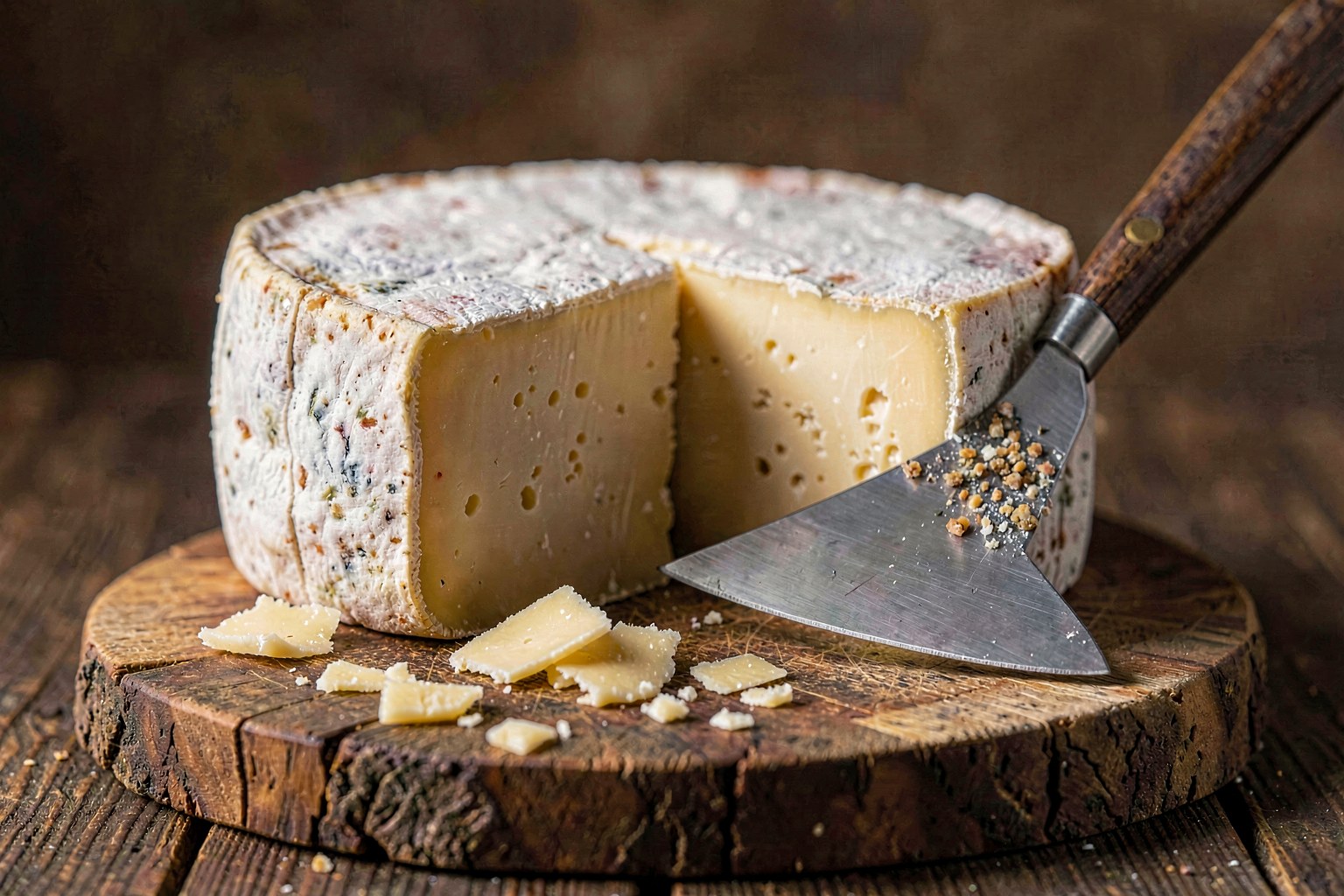
Pecorino
A family of hard, salty Italian cheeses made exclusively from sheep's milk, ranging from mild and creamy to sharp and granular depending on age.
What it is
Pecorino is not a single cheese but a category of Italian cheeses derived from the Latin word 'pecora' (sheep). While the most famous variety is Pecorino Romano, the family includes Pecorino Toscano, Sardo, and Siciliano, each with distinct Protected Designation of Origin (PDO) status. The cheese is produced by curding fresh sheep's milk, often with added rennet, then pressing, salting, and aging. The aging process dictates the texture and flavor: young Pecorino (fresco) is semi-soft and mild, while aged versions (stagionato) develop a hard, granular texture capable of being grated, with intense, piquant, and sometimes nutty notes.
How to buy
Seek out cheeses with a wax seal or an imprint on the rind indicating the specific PDO region (e.g., 'Pecorino Romano DOP'). Avoid pre-grated bags labeled 'Pecorino' containing anti-caking agents like potato starch or cellulose; these dilute flavor and clog graters. Instead, buy a wedge and grate it fresh. If the rind is overly dry, cracked, or smells of ammonia, the cheese is past its prime. Specialty Italian delis and high-end cheese shops offer the best selection, though well-stocked mainstream grocers often carry a decent wedge of Pecorino Romano or Toscano.
Storage
Wrap the cheese tightly in parchment or wax paper, then place it inside a loose airtight container or a resealable bag in the warmest part of your refrigerator (usually the vegetable drawer). This allows the cheese to breathe while preventing it from drying out. Properly stored, a wedge can last 3–4 weeks. If white mold spots appear on the rind, simply cut them away; if the cheese develops a strong ammonia smell or turns slimy, discard it immediately.
How to use
Grate Pecorino finely for pasta sauces and salads to ensure it melts instantly into the heat of the dish, or shave it in larger ribbons for finishing dishes like carpaccio. Because it is significantly saltier than Parmigiano Reggiano, reduce the added salt in your recipe by at least 25% and taste as you go. Avoid using it in delicate cream sauces where its sharpness might overpower subtle flavors, and never cook it at high heat for extended periods, as the proteins can seize and become gritty.
Where it comes from
Originating in the Roman Empire, Pecorino has been a staple of the Italian diet for over two millennia, historically essential for feeding soldiers and travelers due to its durability. It is the backbone of Roman cuisine, specifically in the 'four pastas of Rome' (Cacio e Pepe, Carbonara, Amatriciana, and Gricia), where its salty punch and melting properties are non-negotiable for authentic flavor.
Substitutions
- Grana Padano or Parmigiano Reggiano — These cow's milk cheeses are less salty and slightly nuttier; use a 1:1 ratio but taste before adding extra salt to the dish.
- Aged Manchego — Another sheep's milk cheese with similar saltiness and texture, though slightly sweeter; ideal for pasta but distinct in flavor.